



You ranked #1. Your traffic still dropped. That's not a bug in your SEO but the game changed under your feet.
Here's the number that should ruin your quarter: when a Google AI Overview appears, the #1 organic result loses 58% of its clicks, nearly double the 34.5% measured eight months earlier.
You didn't get outranked. You got skipped.
So the real question isn't how do I rank higher? It's how do I get the AI to name me?
Most GEO advice stops at add FAQ schema and write clearly. That's table stakes. The part nobody hands you: how to measure GEO when there are no clicks to count, and which signals actually drive citations.
Spoiler: most live off your site.
Key takeaways
- Gartner forecasts a 25% drop in traditional search volume by the end of 2026. A quarter of the traffic you're budgeting around may never arrive.
- Brand mentions predict AI visibility ~3× more strongly than backlinks, 0.664 vs 0.218. Your off-site footprint now outweighs your link-building.
- 83% of AI Overview citations come from outside Google's top 10. You don't have to rank #1 to get cited, you have to be citeable.
What is a GEO strategy?
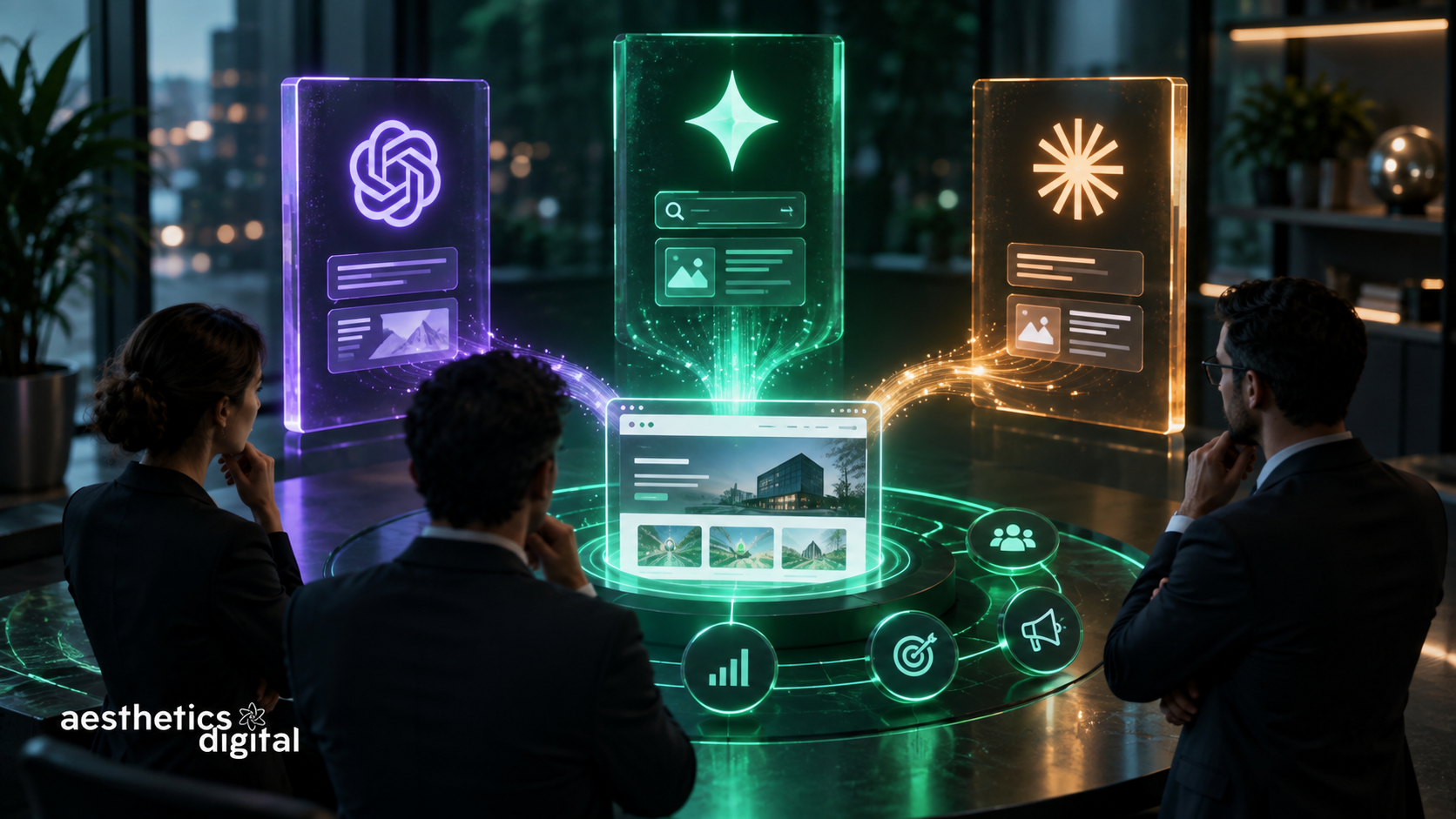
A GEO strategy is your plan for getting cited inside AI answers like ChatGPT, Google AI Overviews, Perplexity, Gemini, instead of only ranking in blue links.
It structures your content, data, and off-site presence so answer engines pull you as a source. Same discipline as SEO, different finish line: citation, not ranking.
GEO vs SEO is the wrong fight. GEO is a layer on top of SEO. Strong foundations are what let engines find and trust you first. Princeton researchers formalized the field in a peer-reviewed KDD 2024 study, where the right tactics lifted AI visibility by up to 40%.
Pro tip: if your page can't be crawled, it can't be cited. Fix the boring technical stuff before you touch anything "AI."
Why do you need a GEO strategy in 2026?
Btw its not a question to be asked, but still you did so, we answered.
Because the click is disappearing, and more SEO won't win it back. When an AI summary appears, users click a traditional result just 8% of the time versus 15% without one.
A ~47% relative drop across 68,879 real queries. Your visibility now depends on being named in the answer, not sitting below it.
According to Ryan Law, Director of Content Marketing at Ahrefs, AI Overviews are already taking the majority of clicks that used to reach top-ranking pages. The people who measure this for a living aren't debating whether it's happening, only how fast.
The bridge: You can track this by hand. By running prompts across ChatGPT, Perplexity, and Gemini every week, logging who gets named in a spreadsheet that's stale by Friday. Or you can hand it to a team that runs AI-search SEO as a system and shows you exactly where you're cited.
How do you build a GEO strategy, step by step?
Five moves in order: baseline your AI visibility, fix your crawlability foundation, engineer citeable content, build off-site mentions, then track citation share instead of clicks.
SEQUENCE MATTERS. The off-site work is wasted if an engine can't parse you first.
1. Baseline where AI mentions you
Run your 20–30 highest-value queries through ChatGPT, Perplexity, Gemini, and Google AI Mode. Log whether you're cited or not and who's cited instead. That "who beat me" list is your competitive map.
2. Fix the foundation
Make pages crawlable, canonicals clean, and key content out from behind JavaScript an LLM crawler won't run. Only 6.82% of ChatGPT's cited results also rank in Google's top 10, but the crawl mechanics that get you found still overlap with technical SEO.
3. Engineer content engines can lift
Under every heading, lead with a 40–55 word answer that stands on its own.
Reason? Because it'll get pulled out of context.
The Princeton team proved the highest-performing tactics are adding statistics, citing sources, and quoting experts, while keyword stuffing actively hurt. Data beats adjectives. This is core content work.
4. Build off-site brand mentions
Since brand mentions predict AI visibility ~3× more strongly than backlinks, shift from link-building to mention-building: Reddit, industry roundups, Wikipedia, third-party press.
Top-quartile brands appeared in AI Overviews up to 10× more often than the next quartile down.
5. Measure citation share, not clicks
More on that below, but if you're still grading GEO by Google Analytics sessions, you're reading the wrong dashboard.
That sequence isn't theory. Structured SEO-and-content work drove a 65% lift in organic traffic for one packaging client. The exact foundation GEO builds on.
GEO vs SEO vs AEO: what's the difference?
They're layers of one job, not rivals. SEO gets you ranked, AEO gets you the direct answer, and GEO gets you cited inside AI responses.
In 2026, AEO is mostly folded into GEO, since voice and answer queries route through the same generative systems.
.jpg)
You don't pick one. You have to stack them. This matters most in verticals where AI answers dominate. Like if you run a private clinic or a home-improvement business, most of your informational queries already open with an AI summary.
How do you measure a GEO strategy with no clicks?
You stop counting clicks and start counting citations.
Track three KPIs:
- AI citation share (how often you're named)
- Overview visibility (which queries trigger an answer that cites you)
- Zero-click displacement (queries bleeding traffic to AI)
Tools like Semrush, Ahrefs Brand Radar, and Profound surface these directly.
Watch quality, not just volume: AI-referred visitors convert 4.4× better than traditional organic. Fewer clicks, worth more each. Grade GEO on that, or you'll call a loss while you're actually winning.
The bottom line
The click era is closing, and you can't SEO your way back into it. A GEO strategy keeps you visible when the answer arrives before the reader: crawlable foundation, answer-first content, real data, and a brand that gets mentioned everywhere your buyers ask questions.
Build it in-house, or hand it to a team that's already mapped which engines cite you and which competitor is eating your share. Schedule your FREE audit and see exactly where you stand in AI answers today, before next quarter's traffic report tells you the hard way.
FAQ

At Aesthetics Digital, big ideas deserve bold execution.
Table of Content


%20(1).png)


.svg)

.svg)
.svg)


.svg)