





Your inbound lead isn't cold. They've been researching you for months. You just couldn't see it.
By the time a B2B buyer fills out your form, they've already run the search, read the reviews, asked ChatGPT, and built a shortlist.
95% of the time, the vendor that wins the deal was already on the buyer's Day-One shortlist. The decision is mostly made before you know the buyer exists.
Most buyer behavior posts still quote a decade-old stat about buyers doing "57% of the journey before sales." That's not the 2026 story.
The 2026 story is that research now runs through AI, the shortlist forms in the dark, and 67% of buyers would rather not talk to your rep at all.
Key takeaways
- 94% of B2B buyers now use LLMs during their buying process. Your buyers are asking ChatGPT about you before they ask you.
- 67% prefer a rep-free experience; 45% used AI in a recent purchase. Your website and your content are the sales pitch now.
- The winner comes from the Day-One shortlist 95% of the time. If you're not in the consideration set before contact, you've likely already lost.
How has B2B buyer behavior changed in 2026?
The buyer is now self-directed, AI-assisted, and mostly invisible until late. They research independently, form a shortlist before ever contacting a vendor, and treat your sales team as a LAST-STEP VALIDATOR. Not a first-step guide.
The research-to-engagement split moved from 70/30 to 60/40 in a single year: more of the decision now happens before you're in the room.
Three shifts sit underneath that.
.jpg)
Pro tip: stop treating the form fill as the start of the journey. It's closer to the finish line.
Why won't buyers talk to your sales team?
Because they don't need a rep to get educated anymore and they've learned that self-serve is faster.
67% of B2B buyers now prefer a rep-free experience, and buying groups have swelled to 6–10 stakeholders, each showing up with their own independent research. More people, less patience for a pitch.
According to Alyssa Cruz, Senior Principal Analyst in the Gartner Sales Practice, sellers "can't rely on static collateral to carry influence" as buyers move through these tasks on their own.
Translation: your website and your content are doing the selling now, whether you designed them to or not.
The bridge: You can keep hoping reps catch buyers in time. Chasing form fills, guessing at what happened before the demo. Or you can build the content, search presence, and self-serve site that shape the shortlist before first contact. That's the work we do at Aesthetics Digital.
How is AI reshaping B2B research?
AI is now the buyer's first stop, not their last. 94% of buyers use large language models during the buying process, and 89% of purchases now include AI features.
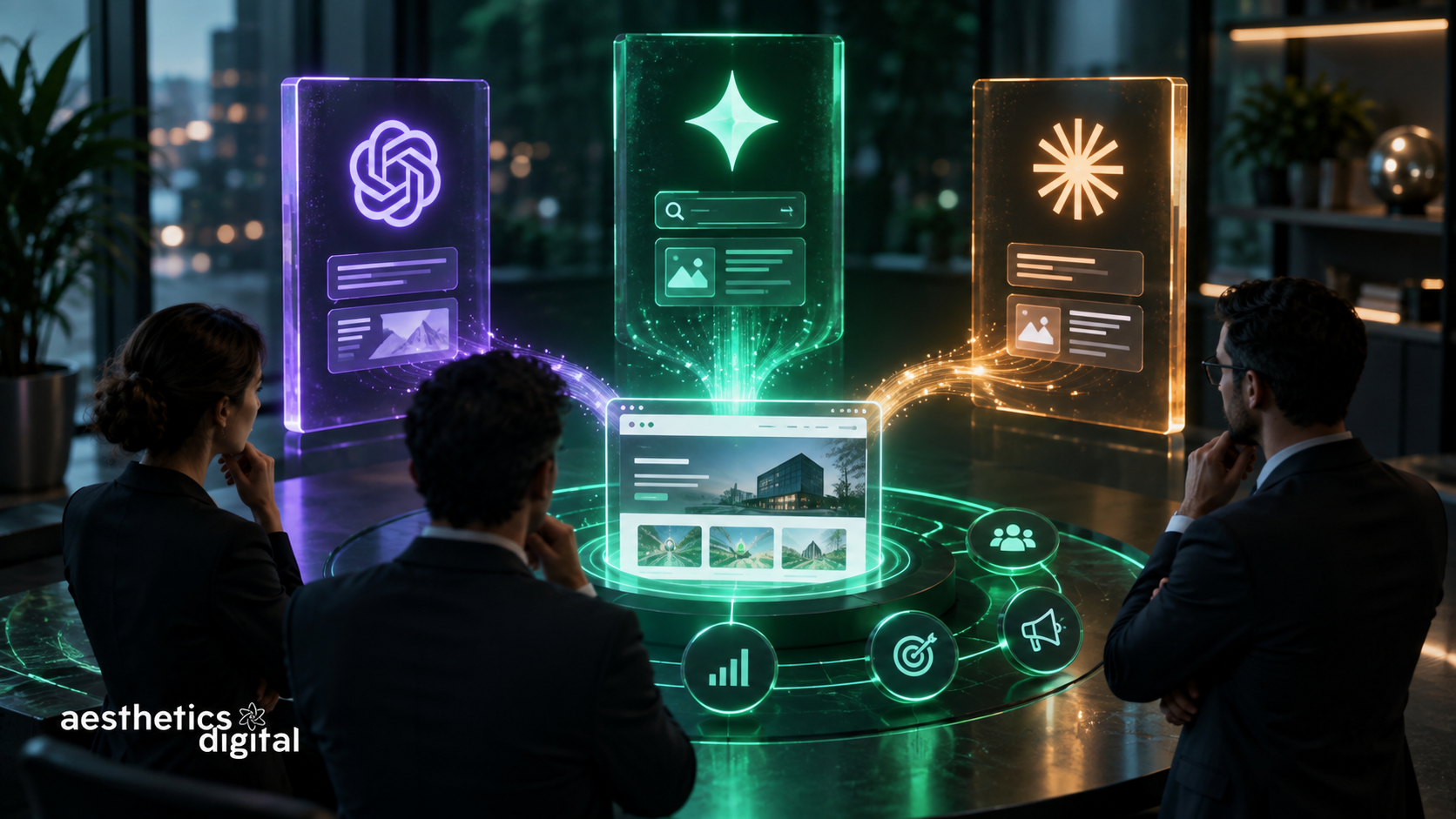
They specifically want vendors to explain. Buyers ask ChatGPT and Perplexity to summarize reviews, compare vendors, and shortlist options.
And those tools lean heavily on review sites and third-party mentions, not your homepage.
This is why the shortlist forms in the dark. Buyers get answers without clicking: when Google shows an AI summary, people click a traditional result just 8% of the time versus 15% without one.
They're forming opinions about you from answers you never see them read.
Let's say a buyer asks ChatGPT for best options for [your category]. If your brand isn't in that answer, because you have no third-party mentions and your content isn't structured to be cited.
You're invisible at the exact moment the shortlist gets written.
That's a search visibility problem, and it's now a pipeline problem.
What should you do differently in 2026?
Win the shortlist, not the demo. Since the decision is largely set before contact, your job is to be the informed, obvious, trusted option during the self-directed research phase.
Four moves:
1. Feed the self-educator
Buyers read your content before they'll talk to you. So, make it genuinely useful and decision-grade, comparison guides, real pricing context, and honest trade-offs. This is core content marketing, not blog filler.
2. Get cited by AI
Structure content to be quoted by ChatGPT and pulled into AI answers, and build the third-party mentions those tools trust. Start with your SEO and AI-search foundation.
3. Make your site sell
If 67% won't talk to a rep, your website has to answer every stakeholder's question and move them to action on their own.
4. Serve the committee, not one hero
Six to ten people with different priorities all visit at different times. Your content and site need answers for the technical evaluator, the economic buyer, and procurement, not just your champion.
Done right, this compounds: it's the same foundation that drove a 65% lift in organic traffic for one client. Visibility that puts you on the shortlist instead of leaving you off it.
The bottom line
B2B buyers in 2026 are informed before they arrive, skeptical until you prove it, and gone if you waste their time. The decision gets made in the dark. In AI answers, review sites, and peer chats you'll never see.
The vendor already on the shortlist wins nearly every time. Waiting for the form fill means fighting for the last 40% of a journey that's mostly over.
Build the content, search presence, and self-serve experience that put you on the shortlist first. Book your free growth audit and we'll show you where buyers are researching your category, and where you're missing from the conversation.
FAQ

At Aesthetics Digital, big ideas deserve bold execution.
Table of Content


%20(1).png)


.svg)

.svg)
.svg)


.svg)