



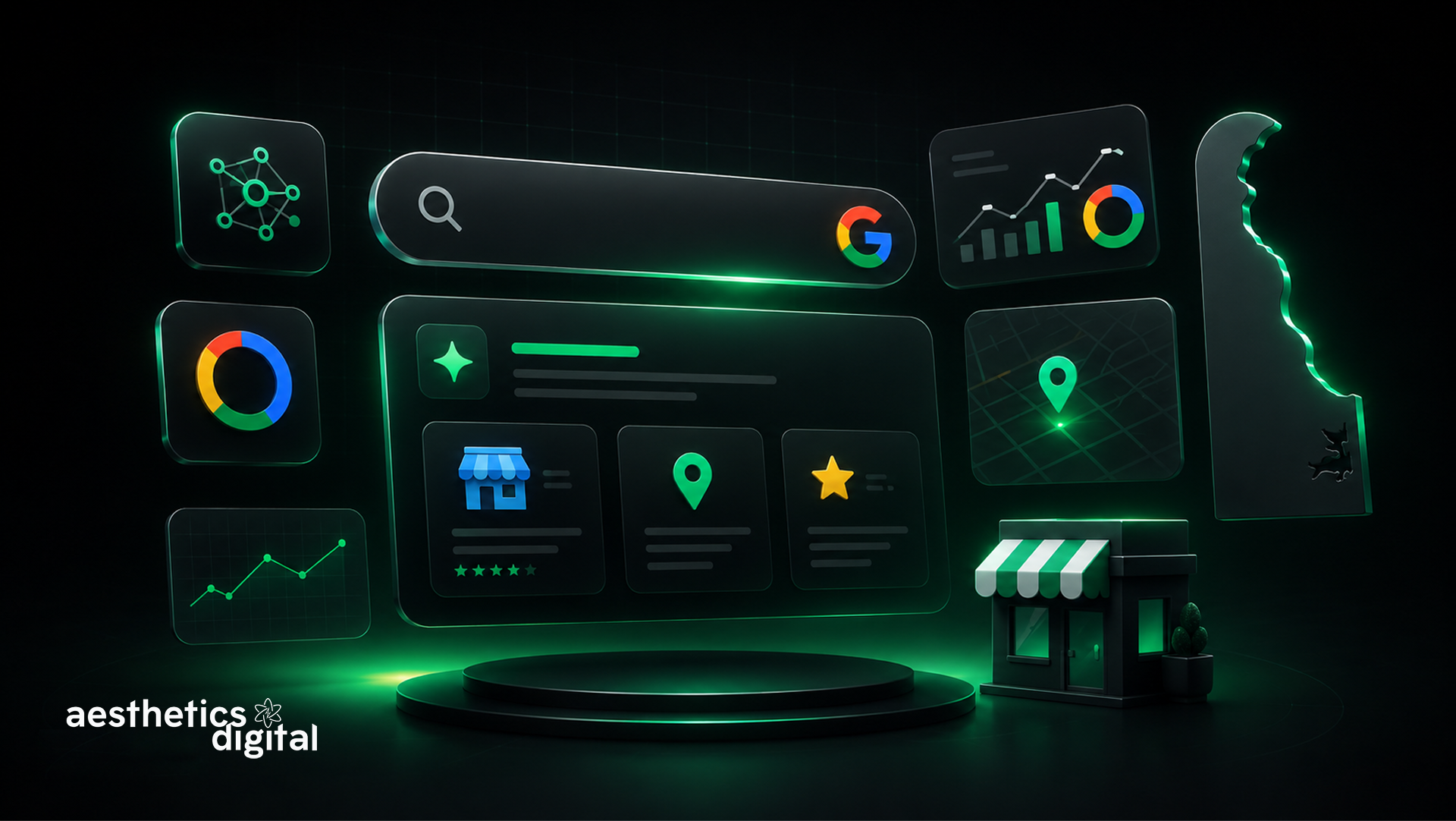
In 25 years, Google never changed how you search. One box. Type a query. Get a list of blue links.
On May 19, 2026, they changed all of that, and most Delaware business owners have no idea it’s already affecting whether customers find them or their competitors.
This isn’t speculation. This isn’t a future trend to watch. Google’s biggest overhaul in Search history went live at Google I/O 2026, and it’s live for your customers right now.
If you own a roofing company in Dover, a med spa in Wilmington, a solar business in Newark, or any local service business in Delaware, this affects you directly.
What Google Actually Changed at I/O 2026
Five things went live. You need to understand all five because each one changes how your customers find you.
1. The Search Box Was Rebuilt From the Ground Up
The classic single-line search field is gone. Google replaced it with what they’re calling the Intelligent Search Box, the biggest upgrade to their search interface in over 25 years.
It expands as:
- users type
- accepts conversational queries
- now takes text, images, files, videos
- even active Chrome browser tabs as input
What that means for a Delaware roofing contractor: a homeowner can now upload a photo of their damaged shingles directly into Google and ask, “Who fixes this near me?”
They’re not typing “roofing company Dover DE.” They’re submitting a photo. If your website doesn’t have:
- detailed service descriptions (that make sense)
- image-alt text
- local signals
Google’s AI cannot match that query. Result: you’re invisible before the customer even knows your name.
2. AI Overviews Now Reach 2.5 Billion People
AI Overviews, those AI-generated answer blocks that appear above the traditional search results, now reach over 2.5 billion monthly active users worldwide.
At that scale, being absent from AI Overviews isn’t a missed opportunity anymore. It’s a competitive liability. Your competitor who shows up in that AI answer block gets the credibility and the call.
YOU DON’T
3. AI Mode Just Hit 1 Billion Users, and It Works Differently
AI Mode is not the same as AI Overviews. AI Mode replaces the entire search results page with a conversational interface powered by Google’s Gemini 3.5 Flash model.
There are no blue links below the AI answer. You are either cited as a source or you receive zero visibility. Period.
AI Mode is now the fastest-adopted feature in Google’s history, and it just crossed one billion users.
Read that again: ONE BILLION USERS SEEING ZERO BLUE LINKS. If you’re not cited, you don’t exist for those users.
.png)
4. Search Agents Are Running 24/7 on Behalf of Your Customers
This is the announcement most business owners haven’t heard about, and it’s the most significant one for local lead generation.
Google introduced Information Agents: autonomous AI systems that run in the background around the clock, monitoring blogs, news sites, social posts, business profiles, and real-time data to find answers for users without them ever submitting a new search.
A homeowner can now tell Google once: “Keep me updated on the best HVAC contractors near me.”
Google’s agent does the research continuously on their behalf and sends them a synthesized recommendation with source links. Your business either earns a spot in that recommendation based on your content, reviews, and online presence, or it doesn’t.
5. Follow-Up Questions Now Flow Into AI Mode Automatically
Users can now ask follow-up questions directly inside an AI Overview without navigating away. Each follow-up deepens the conversation and surfaces more specific sources.
The brands getting cited in the first AI answer also tend to get cited in the follow-up answers. Visibility compounds across the conversation now, which means getting cited once becomes a compounding lead-generation advantage.
The Good News: You Don’t Need a Brand-New Strategy
Before you panic and call every agency in Delaware, here’s what Google confirmed in their official May 2026 Search Optimization Guide:
“From Google Search’s perspective, optimizing for generative AI search is optimizing for the search experience, and thus still SEO.”
Google’s AI systems use Retrieval-Augmented Generation, meaning they pull answers from the exact same Search index that has always powered organic results.
If your page is indexed and ranking, it’s already in the pool for AI citations. You’re not starting over. You’re upgrading what you already have. The fundamentals didn’t change. The stakes did.
The Core Principle
Win traditional SEO, and you become eligible for AI citation. They run on the same engine. Fix your foundation, and both surfaces improve at the same time.
5 Things Delaware Business Owners Need to Do This Month
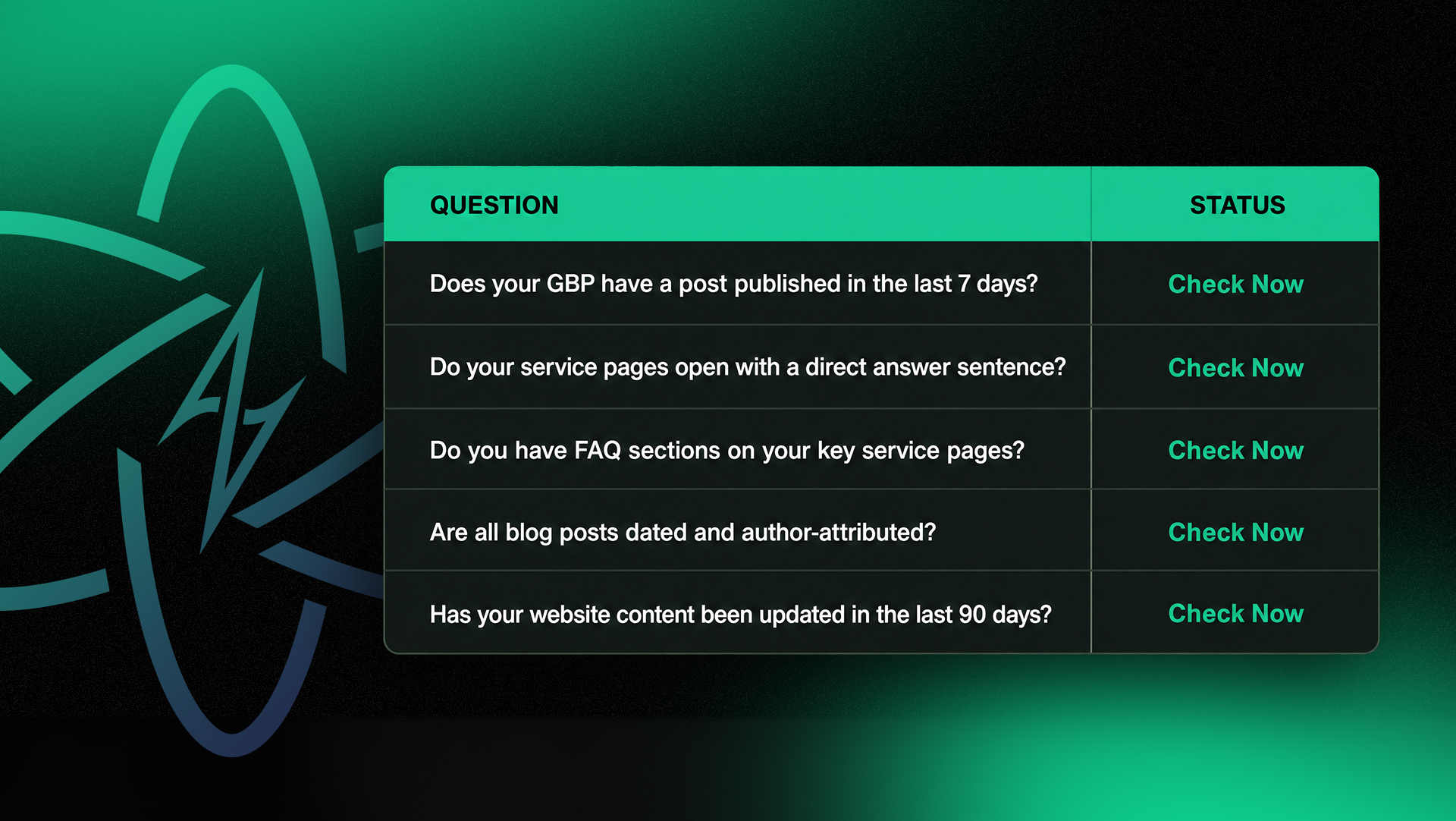
1. Add a Direct Answer Sentence to the Top of Every Key Page on Your Website
Google’s AI pulls the first clean, quotable sentence it finds on a page. If your homepage opens with “Welcome to our company,” or your service page buries what you do in paragraph three, the AI skips you.
Every page needs to open with a declarative statement that answers the user’s question immediately. Like:
“We’re a Webflow web design and SEO agency serving roofing, solar, and healthcare businesses in Delaware.”
That sentence is your AI citation candidate.
2. Build FAQ Sections Into Every Service Page and Blog Post
When a user submits a search, Google’s AI generates a set of related sub-queries to build a more complete answer. A process called query fan-out.
Your FAQ section maps directly to those sub-queries. Each FAQ entry is a separate shot at being cited across multiple searches from one piece of content.
This is the highest-leverage structural change you can make to your site right now.
.png)
3. Activate Your Google Business Profile and Post to It Weekly
GBP data feeds directly into AI-driven local results. Google’s Search Agents scan your profile as part of their research on local businesses.
An inactive GBP is functionally invisible to those agents:
- post weekly
- respond to every review
- upload job photos
- update your hours and services
This is not optional anymore. It’s INFRASTRUCTURE.
4. Add Named Author Bylines and Publication Dates to Every Blog Post
Google’s E-E-A-T signals: Experience, Expertise, Authoritativeness, and Trust. These are now citation signals, not just ranking signals.
An unnamed, undated blog post is deprioritized by AI retrieval systems.
Put a real name on every piece of content. Add the date it was published. Update it when the information changes.
A page that looks stale in 2026 gets skipped.
5. Refresh Any Content Older Than 12 Months
Google’s Search Agents skip stale content. A page last edited in 2024 signals unreliability to a system running in June 2026.
Update your statistics. Update your references. Add a “Last Updated” date at the top. Content freshness is now a competitive advantage, and most of your local competitors aren’t doing it.
The Bottom Line
Google didn’t just add a feature. They rebuilt the foundation of how a billion people find businesses every day. The roofing companies, med spas, solar installers, and contractors showing up in AI answers right now aren’t doing something exotic.
They’re doing the fundamentals better. Sharper content, stronger local signals, fresher pages, real author names.
The window to get ahead of this is open right now, before most of your Delaware competitors realize what just changed.
Frequently Asked Questions
At Aesthetics Digital, big ideas deserve bold execution.
Table of Content


%20(1).png)



.svg)

.svg)
.svg)


.svg)